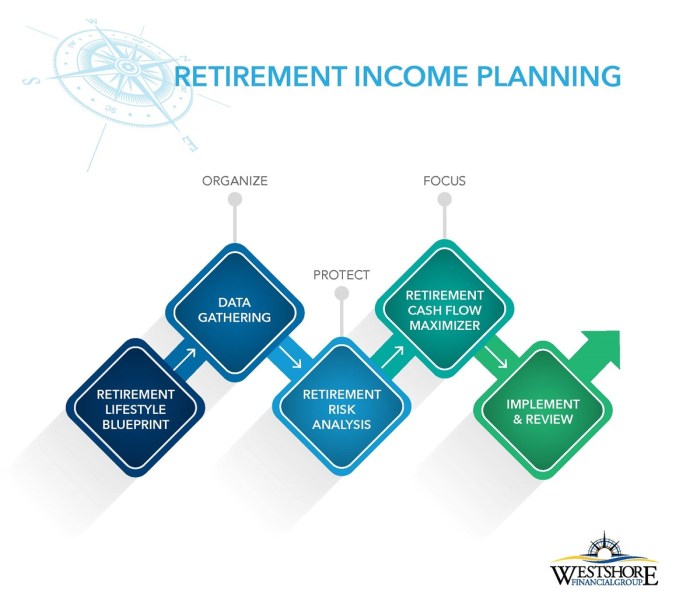
Planning for retirement income isn’t just about saving money; it’s about crafting a secure and fulfilling future. This involves carefully considering your lifestyle aspirations, potential income sources, and the ever-present impact of inflation. Understanding the interplay between savings vehicles, Social Security benefits, and supplemental income streams is crucial for creating a robust retirement plan tailored to your individual needs.
This guide delves into the multifaceted world of retirement income planning, providing a structured approach to help you navigate the complexities of securing your financial well-being in your later years. From defining your retirement needs and exploring various savings strategies to managing your income effectively and adapting to unexpected life events, we’ll equip you with the knowledge and tools to build a confident and comfortable retirement.
Defining Retirement Income Needs
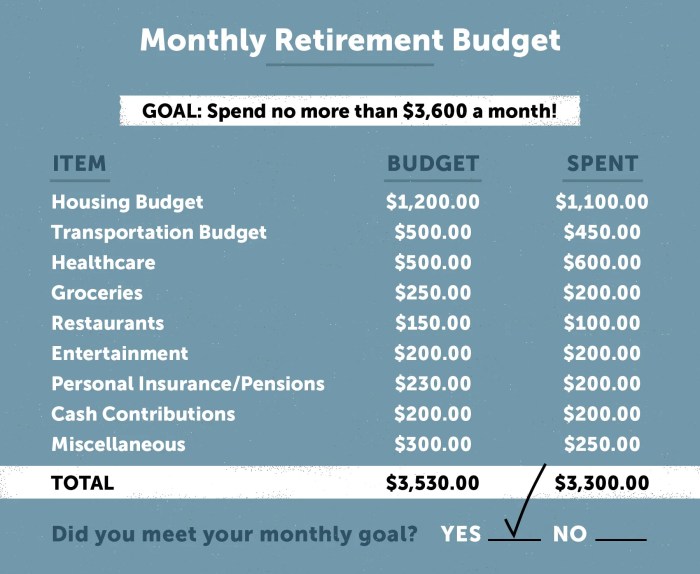
Planning for a comfortable retirement hinges on accurately assessing your future income needs. This involves understanding your spending habits, anticipated lifestyle changes, and potential sources of income during retirement. Failing to adequately address this crucial step can lead to financial insecurity and a lower quality of life in your later years.Factors Influencing Retirement Income RequirementsSeveral key factors influence the amount of income you’ll need in retirement.
These include your current lifestyle, desired retirement lifestyle, health status, inflation, and longevity. Your current spending patterns provide a baseline, but you should also consider potential increases in healthcare costs and the impact of inflation on the purchasing power of your savings. Unexpected events, such as health issues, can also significantly impact your retirement expenses. Planning for these contingencies is crucial.
Essential and Discretionary Retirement Spending
Essential spending covers your basic needs, such as housing, food, utilities, healthcare, and transportation. These are non-negotiable expenses required to maintain a reasonable standard of living. Discretionary spending encompasses non-essential items, like travel, entertainment, hobbies, and dining out. While essential expenses are relatively predictable, discretionary spending can fluctuate based on individual preferences and circumstances. A realistic retirement budget balances both categories to ensure financial stability without sacrificing enjoyment.
Retirement Lifestyles and Associated Costs
Different retirement lifestyles demand varying levels of income. A modest retirement might involve downsizing to a smaller home, limiting travel, and engaging in cost-effective leisure activities. This lifestyle typically requires a lower income than a more lavish retirement, which might include extensive travel, frequent dining out, and a larger home. A comfortable retirement might fall somewhere in between, allowing for some leisure activities and occasional splurges while maintaining financial security.
The costs associated with each lifestyle vary significantly depending on location, preferences, and health needs.
Hypothetical Retirement Budgets
Let’s consider hypothetical retirement budgets for a single individual and a couple to illustrate the differences in income requirements.
Single Individual Retirement Budget (Annual)
| Income Source | Amount |
|---|---|
| Social Security | $20,000 |
| Pension | $15,000 |
| Investment Income | $10,000 |
| Total Income | $45,000 |
| Expense Category | Amount |
|---|---|
| Housing | $12,000 |
| Food | $6,000 |
| Healthcare | $8,000 |
| Transportation | $3,000 |
| Utilities | $2,000 |
| Other Expenses | $4,000 |
| Total Expenses | $35,000 |
Couple’s Retirement Budget (Annual)
| Income Source | Amount |
|---|---|
| Social Security (Combined) | $35,000 |
| Pension (Combined) | $25,000 |
| Investment Income | $15,000 |
| Total Income | $75,000 |
| Expense Category | Amount |
|---|---|
| Housing | $18,000 |
| Food | $10,000 |
| Healthcare | $15,000 |
| Transportation | $5,000 |
| Utilities | $4,000 |
| Other Expenses | $8,000 |
| Total Expenses | $60,000 |
These budgets are illustrative and should be adjusted based on individual circumstances and geographic location. For example, healthcare costs can vary significantly depending on the individual’s health status and location. Housing costs also vary widely depending on the location and size of the residence. It’s crucial to personalize these budgets to reflect your specific needs and financial situation.
Managing Retirement Income
Successfully navigating retirement requires a proactive approach to managing your income. This involves careful planning and consistent adjustments to ensure your funds last throughout your retirement years, maintaining your desired lifestyle and adapting to unforeseen circumstances. Effective strategies combine budgeting, diversification, and inflation-proofing to create a resilient financial plan.
Strategies for Ensuring Longevity of Retirement Funds
A key aspect of retirement income management is creating a sustainable spending plan. This involves carefully assessing your expenses, identifying areas for potential savings, and establishing a realistic budget that aligns with your available income. Regularly reviewing and adjusting your budget is crucial to account for changes in your expenses and income streams. For instance, unexpected medical expenses or home repairs can significantly impact your budget.
Therefore, building an emergency fund is vital, typically recommended to cover 3-6 months of living expenses. This fund acts as a buffer against unforeseen circumstances, preventing you from depleting your retirement savings prematurely. Additionally, delaying the start of Social Security benefits can increase monthly payments, significantly boosting your long-term income.
Budgeting Techniques for Retirees
Several budgeting techniques can help retirees effectively manage their finances. The 50/30/20 rule is a popular method: allocating 50% of income to needs (housing, food, utilities), 30% to wants (entertainment, dining out), and 20% to savings and debt repayment. Another approach is zero-based budgeting, where every dollar is assigned a specific purpose, ensuring all expenses are accounted for.
Retirees might also use budgeting apps or spreadsheets to track their spending and analyze their financial health. For example, a retiree might track their grocery spending using a budgeting app to identify areas where they can cut back, like reducing restaurant meals or opting for less expensive grocery options. This allows for better financial control and a clear understanding of spending habits.
Diversifying Retirement Income Sources
Reliance on a single income source during retirement exposes you to significant risk. Diversification helps mitigate this risk. Ideally, retirees should have a mix of income streams, including Social Security, pensions, annuities, part-time work, and investment income. For example, a retiree might supplement their Social Security benefits with income from a part-time consulting job and interest from a diversified investment portfolio.
This approach reduces the impact of fluctuations in any single income source. A well-diversified portfolio should also consider asset classes beyond stocks and bonds, possibly including real estate or precious metals, to further mitigate risk and enhance long-term stability.
Impact of Inflation on Retirement Income and Mitigation Strategies
Inflation erodes the purchasing power of money over time. This is a critical concern for retirees, as their fixed income may not keep pace with rising prices. To address this, retirees should consider investing in assets that tend to outpace inflation, such as inflation-protected securities (TIPS) or real estate. Regularly adjusting your budget and lifestyle to account for inflation is also crucial.
For example, a retiree might choose to downsize their home or reduce their discretionary spending to offset rising prices. Additionally, exploring options for supplemental income, like part-time work or consulting, can help maintain your living standards. Failure to account for inflation can lead to a significant decline in the real value of retirement savings over time, compromising the longevity of retirement funds.
Securing a comfortable retirement requires proactive planning and a holistic approach. By carefully assessing your needs, diversifying your income sources, and regularly reviewing your plan, you can navigate the challenges and uncertainties of retirement with confidence. Remember, a well-structured retirement income plan isn’t a destination; it’s an ongoing journey of adaptation and refinement, ensuring your financial well-being throughout your golden years.
Question & Answer Hub
How much should I save for retirement?
The amount varies greatly depending on your lifestyle, expenses, and desired retirement length. Financial advisors often recommend aiming to replace 80-90% of your pre-retirement income.
When should I start planning for retirement?
The sooner the better! Starting early allows your investments to grow significantly over time through compounding returns.
What is the difference between a 401(k) and an IRA?
A 401(k) is employer-sponsored, often with matching contributions, while an IRA is a self-directed account with contribution limits.
How can I protect my retirement savings from inflation?
Consider investments that historically outpace inflation, such as stocks and real estate, and regularly adjust your savings goals to account for inflation.


