
Planning for a comfortable retirement requires a proactive and strategic approach. Securing your financial future involves more than simply saving money; it necessitates a comprehensive understanding of investment vehicles, tax implications, and risk management. This guide explores effective retirement savings strategies, empowering you to navigate the complexities of financial planning and build a secure financial foundation for your golden years.
From defining your retirement goals and assessing your current financial standing to understanding diverse investment options and tax optimization strategies, we will delve into the essential elements of successful retirement planning. We’ll also address crucial aspects like risk management and the role of insurance in safeguarding your future. This detailed exploration aims to equip you with the knowledge and tools necessary to make informed decisions about your financial well-being.
Risk Management and Insurance
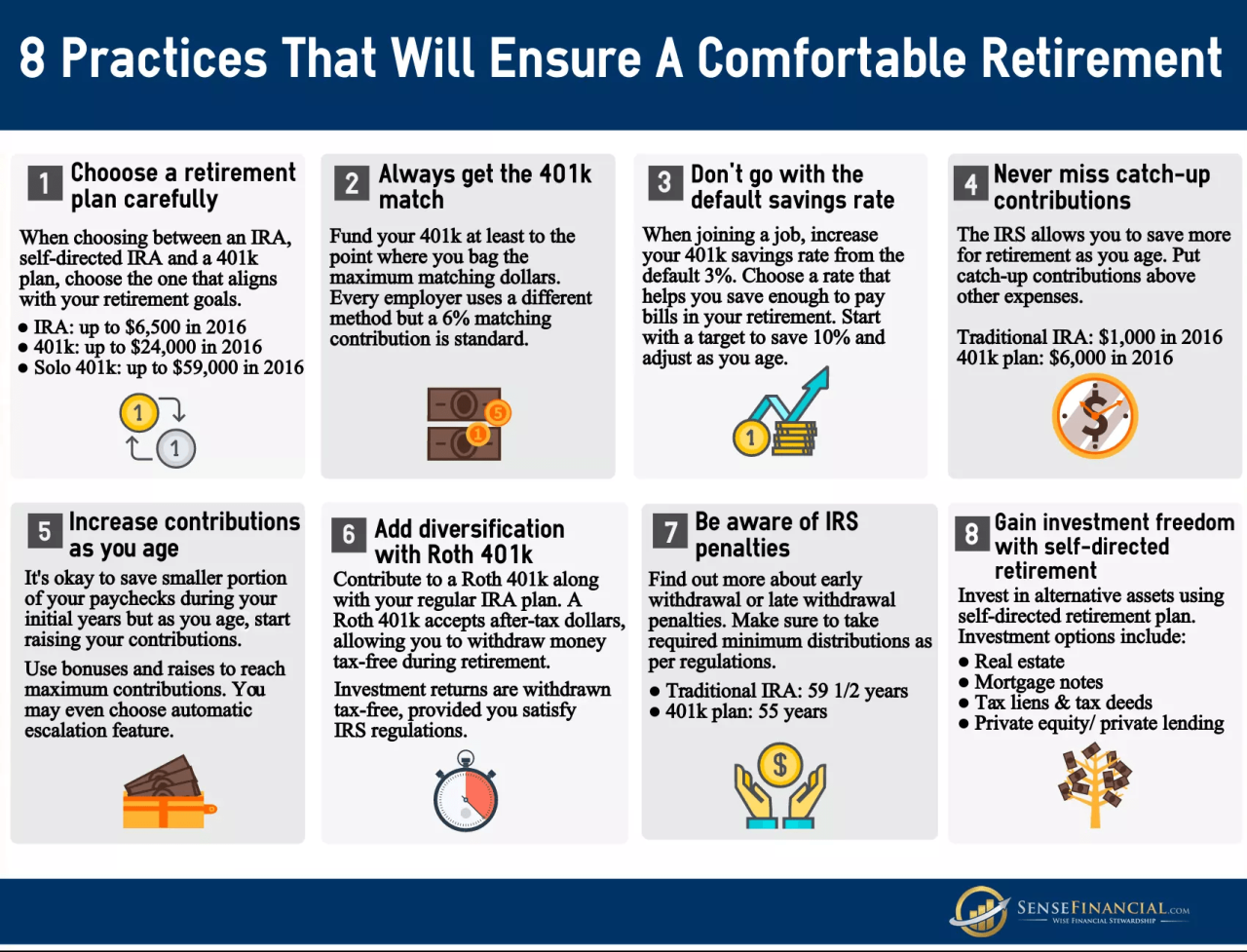
Planning for a comfortable retirement requires careful consideration of potential financial risks. Unexpected events can significantly impact your savings and jeopardize your retirement goals. A robust risk management strategy, incorporating appropriate insurance coverage, is crucial to safeguarding your financial future.
Understanding and mitigating these risks is essential for ensuring a secure and enjoyable retirement. This section will delve into common financial risks, the role of insurance, and strategies for mitigating various threats to your retirement plan.
Common Financial Risks Impacting Retirement Planning
Several significant financial risks can undermine retirement savings. These include inflation, which erodes the purchasing power of savings over time; market volatility, which can lead to significant losses in investment portfolios; and longevity risk, the possibility of outliving your retirement savings. Unexpected health issues and long-term care needs represent further substantial financial burdens. Other risks include unexpected job loss, family emergencies, and unforeseen expenses.
Proper planning helps to address these contingencies.
The Role of Insurance in Securing Retirement
Insurance plays a vital role in mitigating many of the financial risks associated with retirement. Health insurance is paramount, protecting against potentially catastrophic medical expenses that could deplete retirement savings. Long-term care insurance is equally important, covering the substantial costs associated with nursing homes or in-home care should the need arise. Consider life insurance to provide financial security for dependents if you pass away before your retirement funds are depleted.
Disability insurance provides income replacement in the event of an incapacitating illness or injury.
Strategies for Mitigating Inflation, Market Volatility, and Longevity Risk
Inflation can be mitigated through strategic investments that outpace inflation, such as inflation-protected securities or real estate. Diversifying your investment portfolio across different asset classes (stocks, bonds, real estate) can help reduce the impact of market volatility. Regularly rebalancing your portfolio helps to maintain your target asset allocation. To address longevity risk, consider delaying Social Security benefits, working part-time in retirement, or having a plan for supplemental income.
These approaches increase your income stream and provide a buffer against unforeseen expenses.
Risk Management Techniques
Implementing a comprehensive risk management strategy is crucial for securing your retirement. The following techniques can significantly enhance your preparedness:
- Diversification: Spreading investments across different asset classes to reduce risk.
- Regular Rebalancing: Adjusting your portfolio to maintain your target asset allocation.
- Inflation-Protected Investments: Investing in assets that are less susceptible to inflation.
- Emergency Fund: Maintaining a readily available cash reserve to cover unexpected expenses.
- Adequate Insurance Coverage: Securing appropriate health, long-term care, life, and disability insurance.
- Retirement Planning Professional: Consulting a financial advisor to develop a personalized retirement plan.
- Contingency Planning: Developing a plan to address potential job loss or other unforeseen events.
- Budgeting and Expense Tracking: Monitoring expenses and adhering to a budget.
Retirement Planning and Retirement Savings
Retirement planning and retirement savings are inextricably linked; one cannot exist effectively without the other. A robust retirement plan provides the framework for achieving your financial goals in retirement, while consistent retirement savings are the engine that powers that plan. Without a clear plan, saving becomes aimless; without savings, a plan remains just a wish.Retirement planning involves defining your retirement lifestyle aspirations and then developing a financial strategy to achieve them.
This includes determining your desired retirement age, estimating your living expenses in retirement, and identifying the resources you’ll need to meet those expenses. Retirement savings, on the other hand, are the concrete actions you take to accumulate the necessary funds. This involves choosing appropriate investment vehicles, contributing regularly, and managing your investments wisely to maximize growth and minimize risk.
Creating a Comprehensive Retirement Plan: A Step-by-Step Guide
A well-structured retirement plan is built upon a series of deliberate steps. Following a methodical approach ensures a higher probability of success.
- Determine Your Retirement Goals: Define your desired retirement lifestyle. Consider factors like where you want to live, your travel aspirations, and your healthcare needs. Estimate your annual expenses in retirement, accounting for inflation. For example, if your current annual expenses are $50,000, you might estimate your retirement expenses to be significantly higher, perhaps $75,000 or more, depending on anticipated inflation and lifestyle changes.
- Estimate Retirement Income Needs: Based on your estimated expenses, calculate your required retirement income. This is the total amount you’ll need annually to support your desired lifestyle. Consider potential sources of income like Social Security, pensions, and part-time work.
- Assess Your Current Financial Situation: Determine your current savings, investments, and debts. This provides a baseline for measuring your progress towards your retirement goals. Include all assets and liabilities in this assessment.
- Develop a Savings and Investment Strategy: Create a plan for saving and investing to bridge the gap between your current savings and your estimated retirement income needs. This will involve choosing appropriate investment vehicles such as 401(k)s, IRAs, and taxable brokerage accounts, based on your risk tolerance and time horizon. Diversification across asset classes is crucial.
- Regularly Monitor and Adjust Your Plan: Life throws curveballs. Regularly review your retirement plan (at least annually) to ensure it’s still aligned with your goals and adjust it as needed. This may involve increasing your savings rate, changing your investment strategy, or reassessing your retirement timeline.
The Importance of Regular Review and Adjustments
Regularly reviewing and adjusting your retirement plan is not merely advisable; it’s essential. Circumstances change – job loss, unexpected medical expenses, changes in family structure, shifts in market conditions – all of these can significantly impact your retirement savings and your ability to achieve your goals. Annual reviews allow you to proactively address these changes and make necessary adjustments to stay on track.
For instance, a market downturn might require you to adjust your investment strategy, while a change in health status might necessitate reassessing your healthcare costs and adjusting your savings goals accordingly.
Impact of Unforeseen Circumstances and Adaptation Strategies
Unforeseen events, such as job loss, major illness, or unexpected family emergencies, can significantly derail even the most meticulously crafted retirement plan. For example, a prolonged period of unemployment could deplete savings, forcing a delay in retirement or a reduction in planned spending. A major illness might necessitate significant medical expenses, eating into retirement funds.Adapting to such circumstances requires flexibility and resourcefulness.
This might involve delaying retirement, reducing planned spending, increasing savings contributions if possible, or seeking additional sources of income. Revisiting your retirement plan and adjusting it to account for these new realities is crucial. Consider consulting a financial advisor to explore options such as accessing retirement funds early (with potential tax penalties) or exploring alternative income streams.
It’s about adjusting your course, not abandoning the journey entirely.
Successfully navigating the path to a financially secure retirement hinges on a well-defined plan, consistent saving, and informed investment choices. By understanding your retirement goals, assessing your current financial situation, and strategically allocating your resources, you can significantly increase your chances of achieving financial independence in your later years. Remember, consistent review and adaptation of your plan are key to weathering unforeseen circumstances and ensuring your retirement plan remains aligned with your evolving needs and aspirations.
Take control of your financial future today.
User Queries
What is the difference between a traditional IRA and a Roth IRA?
A traditional IRA offers tax deductions on contributions, but withdrawals are taxed in retirement. A Roth IRA doesn’t offer upfront tax deductions, but withdrawals are tax-free in retirement.
How much should I save for retirement?
The ideal savings amount varies depending on individual factors like lifestyle, expenses, and longevity. A general guideline is to aim for saving at least 10-15% of your pre-tax income.
When should I start saving for retirement?
The sooner you start saving, the better. Even small contributions made early can significantly benefit from the power of compounding over time.
What are some common retirement planning mistakes to avoid?
Common mistakes include not starting early enough, failing to diversify investments, neglecting to adjust the plan for inflation, and withdrawing funds too early.


